
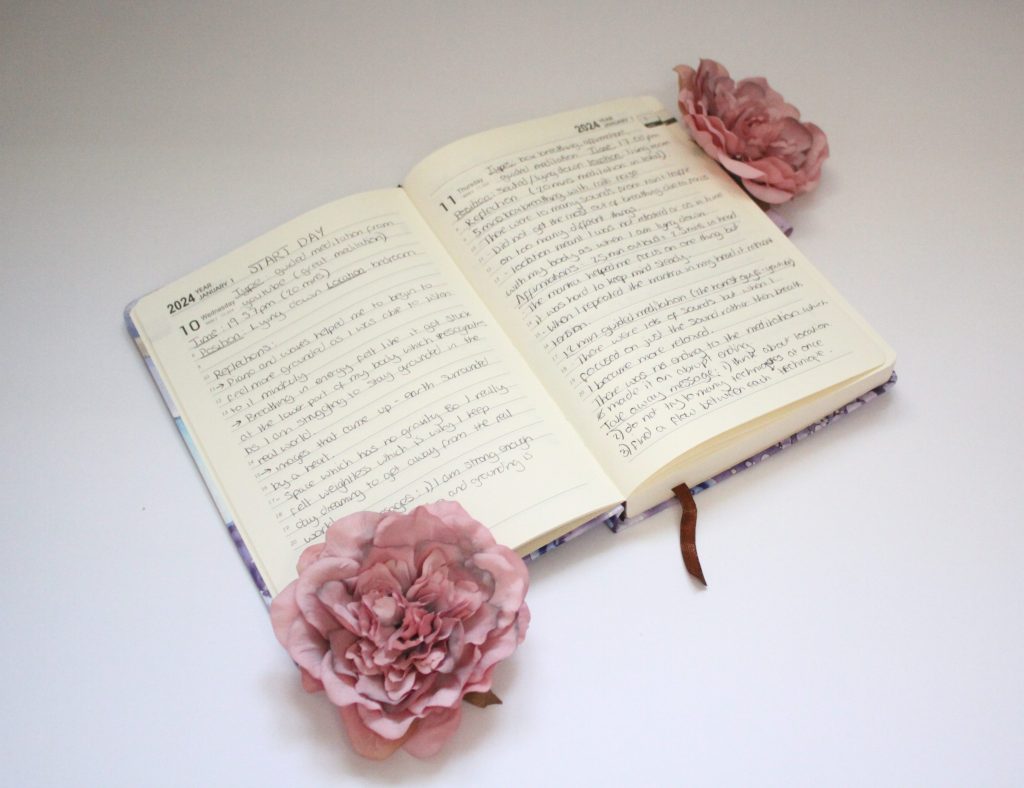
It may feel overwhelming when we talk about journaling as the main goal was to kick start a daily meditation practice. However, the two come hand in hand and there are many benefits to keeping a journal throughout your meditation journey. However, if you feel that a meditation practice is not for you then maybe a daily journaling session can be used as an alternative. One of the main reasons for keeping a meditation journal is to help log your progress. It can sometimes be difficult to see the benefits when you are in the moment and journaling is a cathartic, reflective and a grounding exercise.
Benefits of Journalling
- It helps you to focus on the positives.
- It is a way to understand your emotions.
- It can help you to process things.
- It is a very grounding practice.
- It can lead to change, or give you a new perspective.
- It can help with creativity.
Types of Journals
If at the start of this post you have already decided that meditation is not your vibe, but you would like to try journaling there are many different types of journals that you can choose from. We have added a few of our favourite’s bellow.
- Diary
- Art Journal
- Bullet Journal
- Habit tracker
- Food Journal
- Project Journal
- Meditation Journal
- Gratitude Journal
- Self-Care Journal
- Dream Journal
- Poetry Journal
- Creative writing Journal
Hints and Tips
We have established the benefits of journaling, but the question is how to start. If you have never tried journaling before we have put together some hints and tips on how to journal.
- You don’t have to write it on paper – Technology is a wonderful tool, as you can use many different forms to log how you are feeling. You may find a tracking app or just write a note on your phone. Your journal does not have to look like a conventional diary if that does not suit you. So why not try out a few different methods and see which one works best for you.
- Schedule journaling into your day – We find it is best to write just after you have completed your meditation because it is still fresh. Whether that is first thing in the morning or late at night is up to you. However, if you just want to do a journal entry rather than pair it with the meditation then write whatever time you like providing you can keep it consistent.
- Start small – Your journal entry does not have to take up a lot of time. It can be just one word or a few sentences. The purpose of your journal is to log any changes, thoughts, emotions that come up during your day or during your meditation practice.
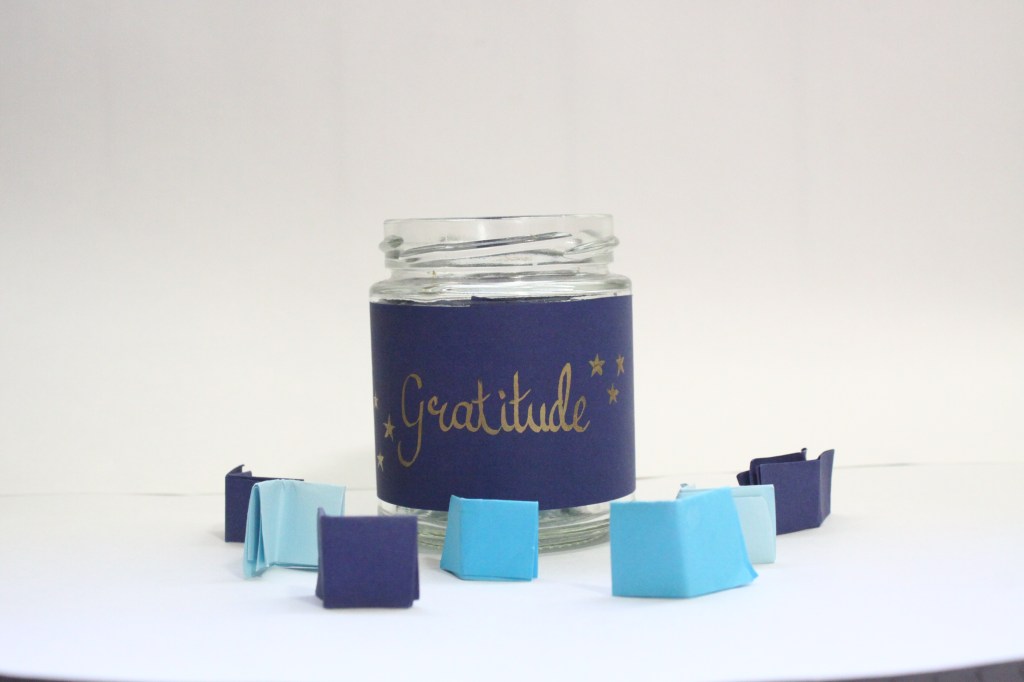
- If you are unsure what to write about, do a gratitude list – If nothing comes up during your meditation that you wish to write about, that is OK. It is still good practice to write something down anyway, so why not start with a gratitude list.
- Use different journaling techniques – Your journal is something that is unique and personal to you. You may find that some techniques such as having writing prompts, drawing pictures, creating your own progress chart are useful to you. So, we encourage you to get creative and try a few different forms to see what makes the biggest impact.
- Make your journal personal and messy – Your journal does not have to look pretty by any means. You could stop, start, scribble, draw in any way you like. What is important is that you get your feelings, emotions and any other information that comes up, down onto paper.
- Keep your journal handy in your bag – Having your journal handy is good because you never know when you might see something, hear something that is relevant to your practice.
- Write for your eyes only – When writing your journal, you don’t have to worry about what other people might think. It is for your personal growth not anyone else’s, so don’t hold back just write whatever is on your mind.
Journaling is an enjoyable, reflective, and relaxing process so go ahead and feel it, live it, and write it down. Nobody can stop you!

 Learn Your Flow